I’m Autistic or ADHD, Why Is It So Hard to Know What I Need?
It's 4pm and you realise you haven't eaten or had a drink since breakfast. Your head is pounding, you're irritable, and you can't work out why. Or someone asks, "What do you need right now?" and your mind goes completely blank.
If this sounds familiar, you're not doing life wrong. For many autistic, ADHD and AuDHD people, whether diagnosed, waiting for assessment or self-identifying, knowing what you need is hard. There are reasons for that, and understanding them is the first step towards being kinder to yourself.

Why is it so hard to notice what you need?
If you've gone through life undiagnosed, there are usually several things to consider.
Your body's signals may be quiet or confusing.
Interoception is the sense that tells us what's happening inside our bodies. Many neurodivergent people struggle with interoception. When it works differently, hunger, thirst, pain, tiredness and even feeling too hot or cold can go unnoticed until they are overwhelming. Some neurodivergent people don’t notice they are thirsty until they go to the loo and realise they are dehydrated!
You learned to mask.
Years of working out what's socially expected and acting accordingly means you may have gotten used to pushing your own needs down. You might have forced yourself to sit still, forced eye contact or pushed through exhaustion because that's what you saw everyone else doing. Eventually, you stop checking in with yourself at all.
Your needs were overlooked growing up.
You may have grown up in a household where your needs weren’t recognised or validated. You may have learnt that it wasn’t ok to want or need something. These experiences can make it harder to allow yourself to have needs as an adult.
You were told you were too much.
Too sensitive, too intense, too dramatic, too picky. If your needs were noticed, but they were treated as a nuisance, it would make sense if you started to see them as a burden and learned not to talk about them
Naming feelings can be hard.
Alexithymia describes difficulties identifying and describing emotions, and this is common in autistic and ADHD people. If you can't notice if your heart is beating fast because you’re anxious, or that you are clenching your jaw because you’re frustrated, how you feel is confusing. As a result, it's hard to know what would help.
You've had nothing to compare it to.
When you don't know that your brain works differently, you assume that your experience is like everyone's experience. You presume that everyone finds supermarkets draining or can’t start tasks they care about. If everyone's just pushing through, why would you need anything different?
If you're a parent, there can be another layer.
As parents we often put our own needs to the bottom of the pile. And if you have a neurodivergent child, it can make it even easier to put yourself last.
Awareness comes first
We think of meeting your needs as three steps: AWARE (noticing what you need), ALLOW (giving yourself permission to have those needs) and ADAPT (seeking support and making changes to meet them). Each deserves time, and this blog is about the first.
Becoming aware doesn't mean you have to fix anything yet. Some needs might feel impossible to meet right now, and that's okay. Simply acknowledging them is a meaningful step, especially if you've spent years pretending you didn't have any.
Using the Needs Wheel to get started
The Needs Wheel is our unique tool for seeing where your struggles and strengths lie, and where extra support might help. It has four quadrants, each with its own prompts.
Regulation (your body)
Do you notice when you're hungry, thirsty or in pain? What kind of movement helps you feel settled? How do you rest and recharge?
Processing (your brain)
Can you name how you feel? Which sounds, lights or textures overwhelm you, and which bring you joy? Is planning and starting tasks easy or hard?
Connection (you and others)
How do you communicate best? Do you need alone time when you're upset, or company? Where do you feel most understood?
Structure (your life)
Do you need routine and predictability, or do you thrive on spontaneity? Are transitions hard? Which environments feel easiest?
There's no right or wrong way to fill it in. Jot down whatever comes to mind, and it's fine if something fits more than one quadrant. If you can't answer a prompt yet, that's useful information too. Think back to times things felt easier and ask what was different.
Everyone has needs, and seeing them side by side is often helpful in multiply neurodivergent households where needs can often collide.
Your needs will also change depending on where you are. What you need at work may differ from what you need at home, so the Needs Wheel is something to come back to as life shifts.
It works for families too. Parents can complete it for themselves, for their children, and for co-parents, whether or not they are neurodivergent. Everyone has needs, and seeing them side by side is often helpful in multiply neurodivergent households where needs can often collide.
You're not the problem.
If you've struggled to know what you need, that isn't your fault. It can happen if your needs were missed, dismissed, hidden or not recognised for a long time. You are not a problem to be fixed. Your job is to tune in to your neurodivergent needs, becoming Aware is the first step. Next comes Allow, and then Adapt, where we can ask questions about how we can change the environment. When our environment changes, our outcomes often do too.
You don't have to work it all out at once. Start with one quadrant, or even one question, and notice what comes up. Having needs, whether you're diagnosed or not, is simply part of being human, and you're allowed to have yours.
If you'd like a structured place to begin, you can download our Needs Wheel workbook here. It includes additional prompts for each quadrant so you can work through them at your own pace.
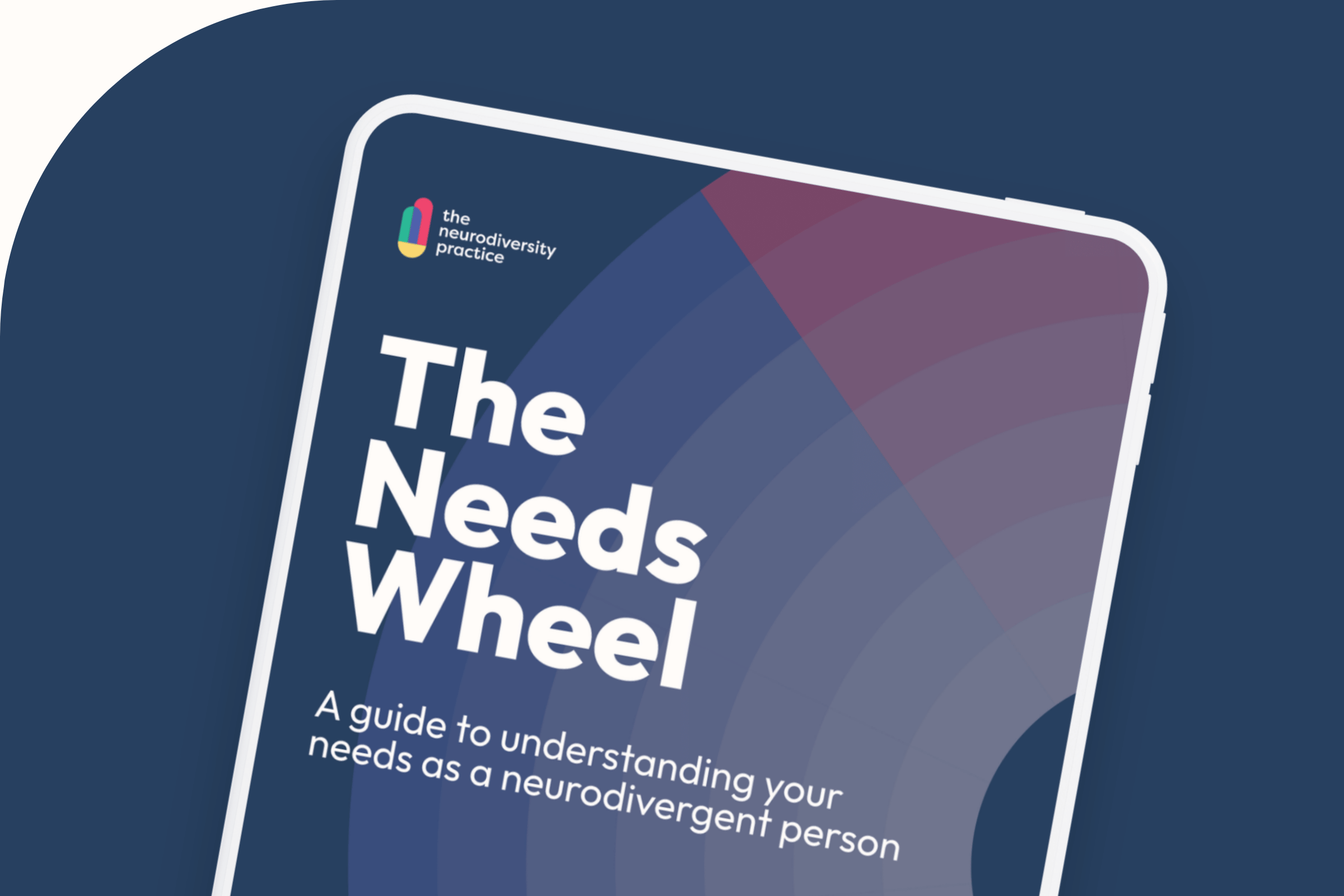
This workbook will help you explore your neurodivergent needs, and your child’s, beyond diagnostic labels, so you can build clarity, compassion, and sustainable support.
If you’re autistic, ADHD, or AuDHD, it can be difficult to understand what your individual needs are. Many neurodivergent people say, “I have no idea what I need!” and then understandably struggle to identify what helps them. If this resonates, it’s not your fault.
Bringing your awareness to your individual needs is the first step toward understanding them and giving yourself permission to meet them. This is part of our 3 step process: Aware, Allow, Adapt.
This can feel even more complex if you’re a parent, especially in a multiply neurodivergent family. Clashing or contradictory needs between family members can create tension, misunderstandings, and overwhelm. Finding a balance that works for everyone is hard. But when needs go unmet, stress, burnout and conflict become more likely.
Looking for ongoing support? This resource (and all others) is included with unlimited access as part of The Neurodivergent Parent Space, our psychology-led community for neurodivergent parents, with monthly webinars, practical resources, expert guidance, and a supportive community.
And you don't have to do this alone.
Come and join us in The Neurodivergent Parent Space, a supportive community, led by three Clinical Psychologists, where you can swap ideas, ask questions and learn practical strategies from resources like Grounded, our sensory regulation toolkit, alongside other neurodivergent parents who get it. All of our resources named here are included for free in the community too. Start your two week free trial, to see if it’s right for you.