
Executive Function Tips for Neurodivergent People
Executive functioning is the brain’s ability to plan, organise, manage time, regulate emotions, and stay focused.
For neurodivergent people, these skills can work differently - making everyday tasks feel overwhelming, especially in environments that don’t meet your needs.
This free ebook offers simple, practical strategies to support your executive functioning in a way that works for your brain.
From habit hacks to dopamine boosts and time management tips - it’s a friendly, neuro-affirming guide to getting things done with less stress.

More Resources for Neurodivergent Parents
Check out our resources page especially for neurodivergent parents. With low-cost ebooks designed specifically for you on a range of topics, have a browse to see what resonates.

Neurodivergent people may find communicating assertively with others - partners, family members, colleagues, or teachers, for example - challenging at times. This can be for a variety of reasons, including difficulty reading others or knowing what is expected, rejection sensitivity, processing speed and verbal fluency challenges, alexithymia (difficulties understanding emotions), differences in communication preferences and styles, past traumas, and many other reasons.
However, being assertive can be even more important as a neurodivergent parent. We may need to advocate for ourselves and our children to get our needs met; we may need to share our identities and diagnoses at work or with family; we may need to have productive conversations with our partners about supporting each other.
In this guide, we share information and strategies that can help you improve your communication skills, including common traps to avoid and our 4-step assertive communication process.
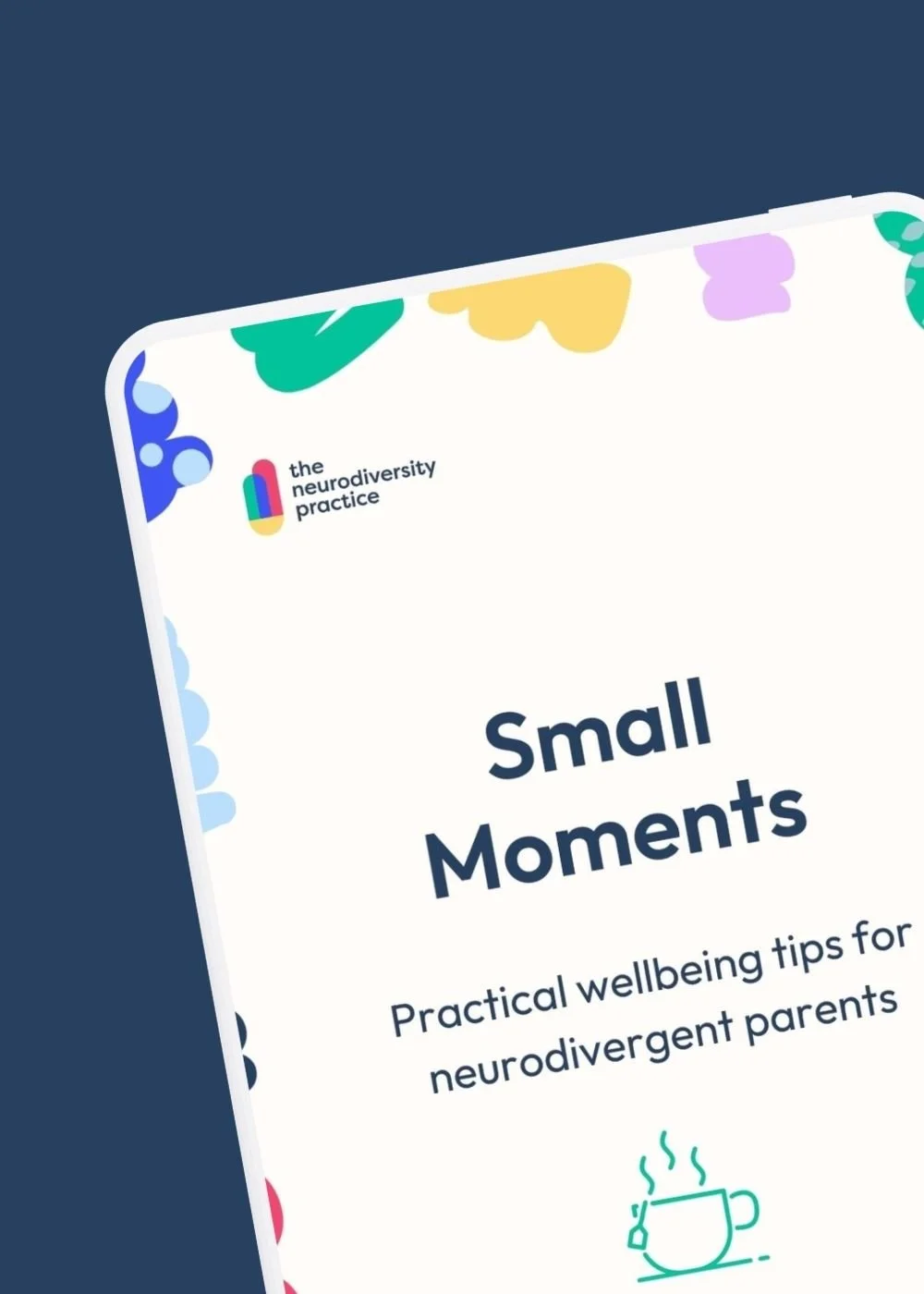
Parenting while neurodivergent can make self-care feel out of reach. This gentle, pressure-free guide offers a list of realistic, achievable ways to support your wellbeing and regulation - without the overwhelm.
Forget perfection or lifestyle overhauls - this resource focuses on small, comforting moments you can actually fit into your day. From finishing a hot drink to taking a quiet minute alone, each idea is designed with neurodivergent minds in mind.
Includes playful, low-effort methods for choosing self-care options (like dice rolls or pick-and-mix games), making it both accessible and fun.

Parenting a child or teen who is sensitive to demands or pressure, or who has a PDA (Pathological Demand Avoidance/Pervasive Drive for Autonomy) profile means understanding that control, autonomy, and emotional safety are central needs.
Demand-sensitivity is common in neurodivergent children, particularly those with autistic traits, but ADHD characteristics can play a role, too.
What looks like avoidance or defiance is often the protective response of a highly sensitive nervous system in relation to fear, anxiety, overwhelm, or loss of agency. This can happen frequently during times of transition or boundaries.
In this guide, we share strategies that can help you create a calmer, more connected home. They can be tailored based on age and need.

Neurodivergent parenting is different. So is this Space.
Finally, a community space made for how you think, feel and parent. Delve into a library of specially curated resources such as this, as well as monthly workshops and support sessions run by Clinical Psychologists, and real connection with other parents who actually “get it” - join us in The Neurodivergent Parent Space.
